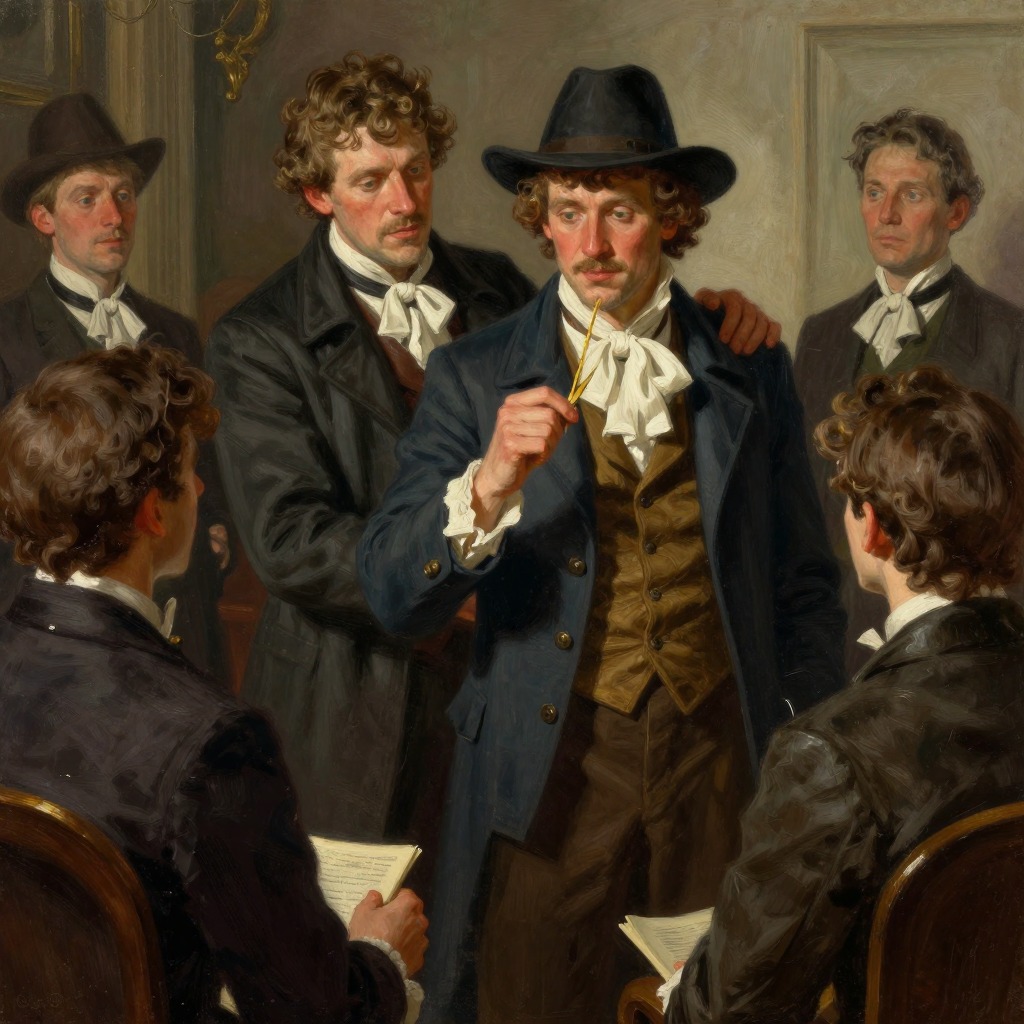
Silver snuff-box
The silver snuff-box is a small, engraved personal possession that surfaces as a decisive piece of evidence in the trial of Jack Dawkins, the Artful Dodger, leading directly to his conviction and transportation. More than a mere stolen trinket, the box functions as a narrative device that crystallizes the gang's petty criminal enterprise, exposes the workings of the Bow Street justice system, and marks a turning point in the fortunes of Fagin's crew.
Appearance and Theft
The snuff-box first enters the story not as a physical object but as the subject of a boastful report. When the Dodger and Charley Bates return to Fagin's den after a morning's work, the Dodger produces "a couple of pocket-books" while Charley displays "four pocket-handkerchiefs." The Jew, inspecting the handkerchiefs, remarks that they are "very good ones" but criticizes Charley for not having "marked them well." This casual exchange establishes the routine of the gang's trade—small, easily concealable items lifted from unsuspecting victims in crowded streets. The snuff-box itself is not mentioned in this early scene, but the pattern of theft is set. Later, when the Dodger is arrested, the police search him and find upon his person "a silver snuff-box, with the owner's name engraved upon the lid." The owner, identified through the Court Guide, swears that the box is his and that he missed it the previous day after being jostled in a crowd where he noticed a particularly active young gentleman—the prisoner. The box is thus the concrete, damning link between the Dodger and the crime.
The Trial and Conviction
The snuff-box becomes the centerpiece of the Dodger's appearance before the magistrate. The evidence against him is straightforward: a policeman saw him attempt to pick a pocket and take a handkerchief, which he put back, and the subsequent search revealed the engraved snuff-box. The owner's testimony confirms the theft. The Dodger, displaying his characteristic bravado, refuses to engage with the proceedings, declaring, "I wouldn't abase myself by descending to hold no conversation with him." When asked if he has anything to say, he responds with theatrical contempt, claiming his attorney is breakfasting with the Vice President of the House of Commons and threatening to make "them beaks wish they'd never been born." The magistrate, unmoved, commits him for trial. The snuff-box, a small, tangible object, has sealed his fate. Charley Bates, upon hearing the news, laments that the Dodger has been taken for "a common twopenny-halfpenny sneeze-box," expressing his disappointment that his friend's career should end over such a trivial item rather than a grand theft of "a gold watch, chain, and seals." Fagin, however, sees the situation differently, consoling Charley by pointing out the distinction of being "lagged at his time of life" and promising that the Dodger will be treated like a gentleman in prison.
Symbolic and Narrative Significance
The silver snuff-box operates on multiple levels within the novel. On the surface, it is a piece of evidence, a stolen good that triggers the legal machinery. Its engraved lid, bearing the owner's name, makes it uniquely identifiable, a detail that underscores the risk the gang runs with every theft. The box also serves as a marker of class and respectability; it is an item carried by a gentleman, a symbol of the social order that the gang preys upon. The fact that the Dodger is caught with such an object, rather than with cash or a less distinctive item, highlights the carelessness or overconfidence that leads to his downfall. Furthermore, the snuff-box episode functions as a darkly comic interlude. Charley Bates's grief is not for his friend's moral failure but for the lack of glory in his capture. Fagin's manipulation of this grief, turning it into pride in the Dodger's notoriety, reveals the warped values of the criminal underworld. The box, in this context, becomes a symbol of the petty, inglorious reality of their lives, a far cry from the romanticized adventures they imagine. Its role in the narrative is to demonstrate that the law, however imperfect, can and does catch up with even the most artful of criminals, and that the consequences, while severe, are often triggered by the most mundane of objects.